Confession time: I’ve never played a single minute of any of the Silent Hill video games. I have, however, now seen all the movies based on that franchise. I’m captivated by everything going on in the background of these films: the monster design, the world-building, the lore, etc. The plots, for better or for worse, are just noise while I’m looking around at the rest of Silent Hill. With that in mind, let’s look at the most recent entry in the series.
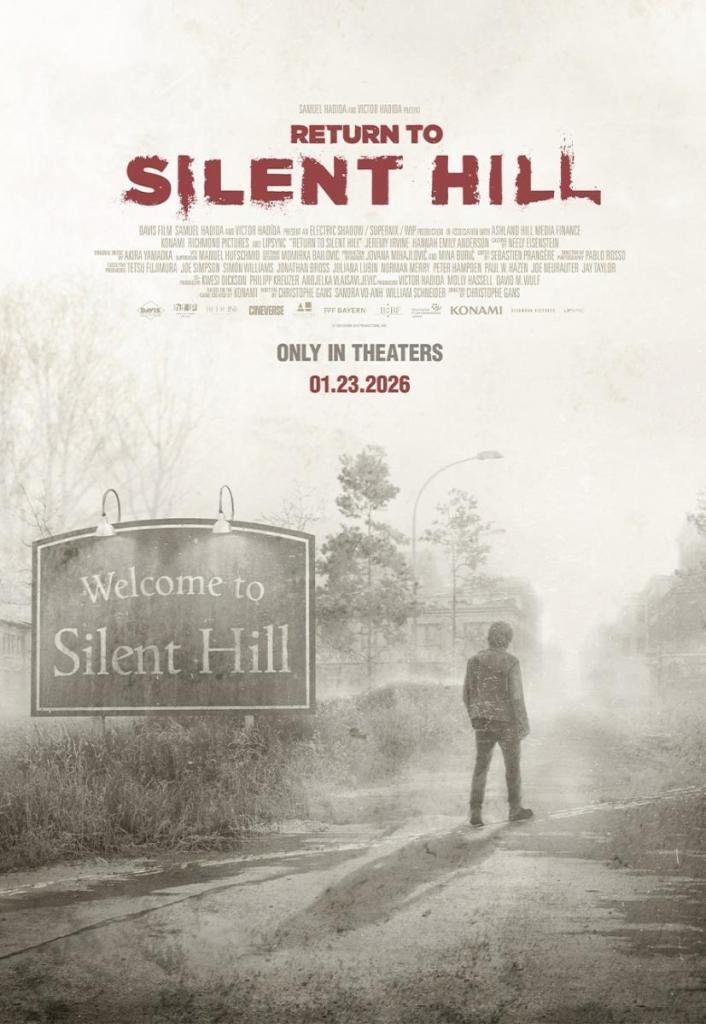
Return to Silent Hill is based on the video game of the same name and, from what I understand, largely keeps the same plot. A man receives a letter from his deceased girlfriend and goes to Silent Hill to investigate. Once there, he finds himself being drawn into the hellish environment of the city—and possibly his own mind.
Keeping in mind what I stated above, Return to Silent Hill is a return to form for the movies franchise. The first film, while not perfect, did an excellent job of setting up the horror of Silent Hill and the curse that afflicts it. The second one, despite the presence of both Sean Bean and Kit Harington, was underwhelming to the point I couldn’t recount the plot if a gun was put to my head. This one felt more like the first and was unencumbered by any baggage the first two films might have imposed upon it had it not been based on the video game of the same name. Free from the constraints of the events in the first two movies, Return was free to explore the weird city and its monstrous inhabitants, some of which are damn-near Bosch-ian in their unearthliness. No film since Silence of the Lambs has done more to make a moth unnerving, I can tell you that.
The cast is largely unknown which works in this case. No overly familiar faces to jolt us out of the weirdness and horror of Silent Hill. These events could be happening to anyone—including us if we’re not careful. The film also does a good job of blurring the lines between what is real and what might just be in our protagonist’s head. There’s a Jacob’s Ladder level of reality twisting, even if it doesn’t do quite as good a job as that older film.
Fans of the video game will likely have their own opinions about the film’s quality, but as someone who’s just along for the horror and weirdness ride, I wasn’t disappointed.
Rating: I’m going to skip rating this one since I looked upon it more as an exercise in world-building and monster design than a piece of narrative entertainment. I enjoyed it enough to consider breaking my self-imposed moratorium and actually play one of these games for the first time. My only fear is that the games would have to compete with my internal head canon and that never goes well.