Let’s begin our weekly gamification of folklore a few days late by looking at the American holiday of Groundhog Day. As I noted in this post, I won’t be providing game mechanics in these posts, but with a little mental elbow grease, the following material could easily be incorporated in an Unknown Armies, Mage: The Ascension, Shadowrun, or similar campaign involving modern magic and/or occult investigation.
Give me some toads’ n’ frogs’ hips
I’m gonna, gonna, put it all together
I’m gonna, gonna mix it up together
I’m gonna, gonna whup it all up good
I’m gonna, gonna kill that ol’ dirty Groundhog
–“Groundhog Blues” by John Lee Hooker

Groundhog Day is observed every February 2nd here in America. On that day, the groundhog emerges from it burrow and its actions predict whether or not winter is coming to an end. If the day is clear and the groundhog sees its shadow, there will be six more weeks of winter. If it doesn’t, winter will come to an early close. Our most famous groundhog prognosticator is “Punxsutawney Phil,” a resident of Punxsutawney, Pennsylvania, which also where the tradition arose here in the States. Other communities throughout the United States have their over regional counterparts to Phil (in my neck of the woods is “Holtsville Hal,” the latest in a line of groundhogs living at the local ecology center) and it’s not uncommon for contradictory predictions to occur among them.
Groundhog Day has connections to the Old World, both to the Christian feast day of Candlemas (also on February 2nd) commemorating the presentation of Jesus at the temple and the Celtic holiday of Imbolc, which marked the vernal equinox and the beginning of the growing season. Groundhog Day is also tied to other animals’ actions acting as weather divination. In France it was the bear that returned to its den for forty days if the sun rose, while in Germany it was the badger.
When German immigrants arrived in the States, they brought that tradition with them. However, perhaps a dearth of badgers in Pennsylvania, the groundhog took on the prognosticator’s role and has since claimed the holiday for its own.
Groundhog Day is not an old holiday. The first written record of it appears in 1840. As holidays go, Groundhog Day is a lighthearted one. It’s a time to remind ourselves of our agrarian past as we become more and more disconnected with it. But despite its less-than-serious nature, there’s still ample material to use for our gaming purposes.
Timely Connections: As noted above, Groundhog Day and Candlemas fall on the same day. In the Neo-pagan traditions, the lesser sabbat of Imbolc, which celebrates the end of winter and is closely associated with the Celtic deity turned Catholic saint, St. Brigid, occurs on February 1st.
Supernatural Associations: Groundhog Day and the groundhog itself are potent symbols of both weather and divination. Divination rites performed on February 2nd could be supercharged as a nation awaits Punxsutawney Phil’s predication. Groundhog bones might have exceptional divination properties and be highly sought after by seers and other prophetic mages. Likewise, weather control rituals and spells may be more effective on February 2nd or require some bit of groundhog to perform. Imagine the sort of supernatural weather fronts and the consequences of such as dozens of magical practitioners all work weather magic on Groundhog Day with conflicting desired results!
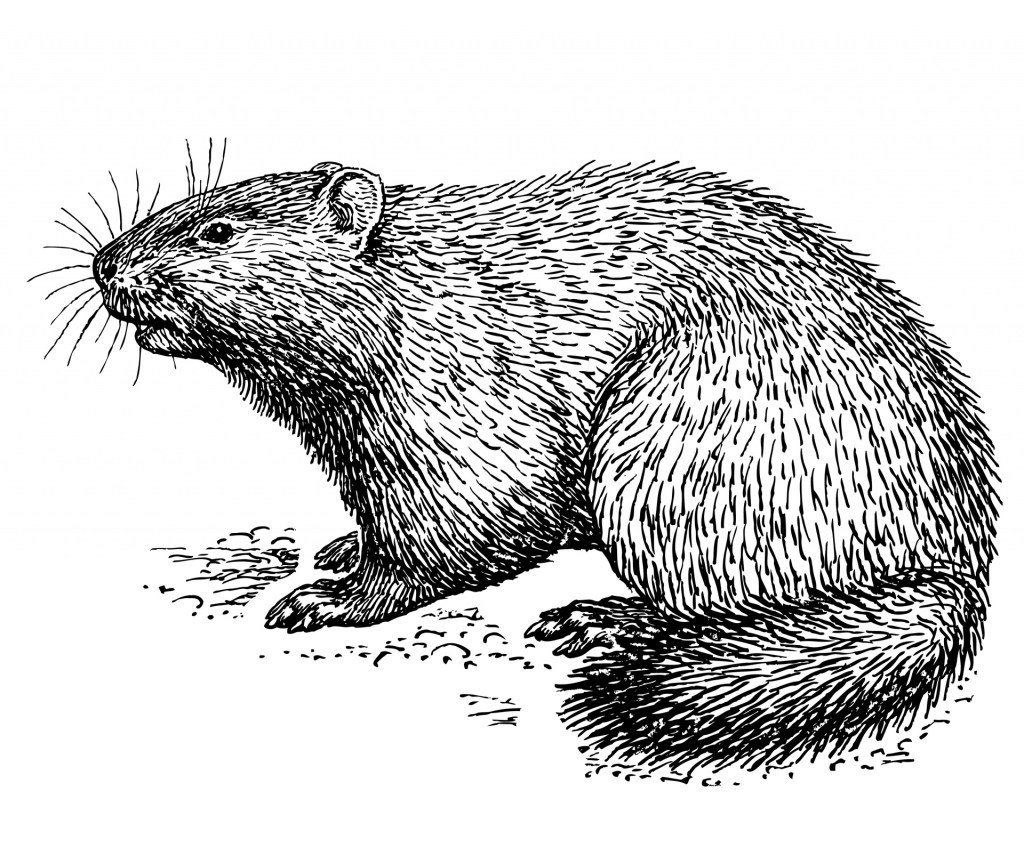
Totems and Supernatural Patrons: Magic practitioners might align themselves with Groundhog as a totem, supernatural patron, or spirit guide in order to harness their power. In addition to their connection with divination and weather, groundhogs are also associated with survival, nesting, grounding oneself, hibernation, rebirth/renewal, determination, self-reliance, and productivity. Not to mention they have some hefty incisors to defend themselves if you mess with them!
Powers of Darkness: Given the role the groundhog’s shadow in the holiday, there’s an innate connection to be played with in regards to shadows, shades, and gloom. A groundhog’s burrow might serve as portal into the Shadow World, allowing things and spirits to cross between the physical world and the shadow realm. Anyone indulging in Jungian shadow work could encounter the groundhog in dreams, visions, or synchronistic encounters in the mundane realm. Of course, groundhog is famously terrified by its own shadow, so perhaps such an encounter means the character is going about things all wrong or that the groundhog must first be slain (either symbolically or in actuality) before the shadow worker can progress further along their path.
Post-Modern Magic: The 1993 film Groundhog Day, in which Bill Murray’s character is forced to relive the same day over and over again, has become part of the cultural landscape. If you were to tell someone your life had become “a Groundhog Day,” they’d likely grasp that it means you feel like your life is in a rut, forced to do the same thing every day. Groundhog Day has become associated with time, especially temporal loops in our cultural mindset, giving it metaphysical resonance as well.
As a result, magic involving time is more potent on February 2nd now. The groundhog, itself, is now a powerful symbol to work sympathetic magic through. A curse that causes the victim to repeat the same mistakes might require a pinch of dirt from a groundhog hole or a few hairs from the back of a woodchuck.
Horror: Groundhog Day doesn’t immediately lend itself to the horror genre outside of comedic horror. One could get a couple miles out of the idea of Punxsutawney Phil becoming possessed by a demonic spirit and tearing the crowd apart live on national television, but otherwise the holiday is a feeble hook to hang an idea on.
The best way to use Groundhog Day in a horror game might be as a sign or omen of worse things to come. If on February 2nd it was discovered that something terrible had occurred to Punxsutawney Phil and all his regional counterparts, it could be an indicator of woeful events on the horizon. With Groundhog Day’s association with time and weather, perhaps it means that the Fimbulwinter is upon us or that time itself is coming to an end.

Tongue Firmly in Cheek: For a more comedic or lighthearted way of tapping into Groundhog Day, the holiday or animal might could become the symbol of those opposed to progress. Groundhog Day’s association with a fond look back at our agrarian past might be adopted by a cabal of neo-Luddite revolutionaries who want to “burrow” into the modern world and bring it down in order to return us to our pastoral past. This “Brotherhood of the Burrow” might mark the sights of their guerilla sabotage with spray-painted images of the groundhog or adorn their secret hideout with its toothy visage.
As a symbol of Americana, a fiendish cabal of sorcerers seeking to bring the nation to its knees might conspire to steal Punxsutawney Phil, the Liberty Bell, and other national symbols to be used as part of a mighty ritual conducted atop George Washington’s head at Mount Rushmore.
Weird Americana Connections: With Groundhog Day’s prophetical role in weather predication, it makes sense that folks in Vermont observe the holiday with keen interest in order to know if it’s time to take their old folks out of hibernation or if they should wait another six weeks for defrosting them. Don’t know about human hibernators? I’ll be looking at them next time.
 Shivers and Shudders