No release from my cryonic state
What is this? I’ve been stricken by fate
Wrapped up tight, cannot move, can’t break free
Hand of doom has a tight grip on me
–“Trapped Under Ice” by Metallica
This week’s bit of gamified folklore comes to us from an obscure Yankee tall tale out of Vermont. It first appeared in an 1887 edition of the Montpelier newspaper, Argus & Patriot, and discusses how the residents of a small Vermont village deal with their elderly and infirm when the cold winter months settle in. These events are said to take place in the town of Calais, about 20 miles from Montpelier.
According to the story, six people, five of whom are “past the age of usefulness” and the sixth “a cripple of about thirty-years-old” are drugged unconscious in January. Upon being declared “ready,” the six are stripped of their clothing except for a single garment and brought outdoors after nightfall. There, the insensible six are laid on logs and exposed to the cold winter air. Onlookers watch as their skin slowly turns blue, then return to the cabin as if a horrible mass murder by exposure hadn’t just been committed.

The next morning, the men folk go out and build a box some ten feet long and five feet high and wide. Lining the box with straw, the frozen bodies are placed inside, covered with a cloth, then packed with more straw. The box lid is firmly nailed into place to “protect the bodies from being injured by carnivorous animals that made their home on these mountains.” A team of oxen then drag the body-filled container to the foot of a steep ledge, whereupon spruce and hemlock boughs are piled atop it. The pile is then left to the elements, where it would be covered by snow that “would lay in drifts twenty feet deep over this rude tomb.”
Come May, once the weather turns warm again, the work party returns to the pile, removes the boughs, opens the box, and cleans out the cloth and straw, exposing the bodies once more. These inert forms are played into troughs made from hollowed out hemlock locks and filled with tepid water. Boiling water is then added from kettles in which hemlock had been steeped “in such quantities that they had given the water the color of wine.”
After a hour-long soak in the troughs, color returns to the bodies and all those gathered around begin rubbing life back into the six. After another hour, the muscles of the face and limbs begin to respond, followed by gasps of breath as the now revivified six return to consciousness. A few draughts of hard spirits finish the defrosting process and soon all six are wide awake and taking. A hearty meal finishes the thawing out of these elders who are “in no wise injured, but rather refreshed by their long sleep of four months.”
The story is of course a tall tale, one of the few ones whose origin was traced to its original source. You can read the full account of the story and the efforts to locate its source here and here. It would be reprinted in 1940s in publications such as The Boston Globe, Yankee Magazine, and The Old Farmer’s Alamac, leading to some researchers to wonder if their might be medical advancements waiting to be discovers in Vermont mountain folk medicine.
And while the story might be fake, there’s no reason we can’t have some fun with it at the gaming table.
Backwoods Medicine: Although the story doesn’t specifically say so, there must be something at work here other than the cold. Our narrator explains the so-to-be-hibernating folks have been drugged unconscious, and it’s not a far jump to assume whatever put them under was something stronger than Grandpa’s white lightning. The folks of Calais know something about herbalism or even alchemy and can whip up a powerful potion. The easy (and lazy) explanation would be that this is something they learned from the indigenous folk, but given this tale involves people of European extraction and not members of the native population, doing so takes us into potentially offensive waters. It’d be better if this concoction comes from the Old Country.
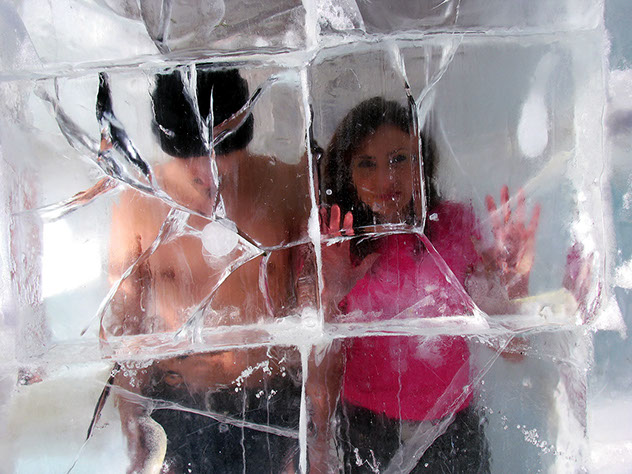
Vermont was the stomping grounds of the French, the Dutch-British, and the English, with the area around Montpelier settled by newly-minted Americans from Charlton, MA in 1781, any of whom could have brought secret knowledge to the region. The draught could have its origins in Dutch alchemy (maybe first decanted by a Van Helsing ancestor?), English witchcraft, or pulled from a French grimoire and brought to the New World with a secret cabal of magicians.
Any pharmacological corporation in existence would love to get a sample of this drink. And in the world of today’s questionable business practices, they might be willing to take illegal steps to both acquire it and ensure they remain the sole owner of the chemical formula. This could lead to an adventure featuring backwoods cunning folk vs. experimental drug-amplified corporate leg-breakers up in the Vermont mountains.
Wood Magic: The story goes to great pains to mention that both spruce and hemlock play a part in the hibernation process. In the case of hemlock, what is being referred to is Eastern Hemlock, a tree found in the Americas, not the poisonous plant that took out Socrates. Both spruce and hemlock are conifers, evergreens associated with longevity. Among the Seneca and Micmac peoples, there are stories emphasizing the hemlock tree’s role in providing warmth, aiding in magical transformation, and holding winter at bay (spruce also appears in that role). Spruce trees are associated with renewal, protection, resilience, strength, connection to the gods, longevity, good luck, immortality, fertility, and magical protection in various cultures. It’s no wonder both trees are mentioned in this tall tale. Perhaps the real magic isn’t in the concoction that the hibernators consume, but in the wood that surrounds them as they hibernate? And what happens should the spirits of spruce and hemlock near Calais turn against humanity? Seems like instead of six hibernating bodies you’d end up with six corpses. Perhaps ones then animated by vegetation spirits and used as an instrument of revenge?
Communication with the Otherworld: In northern shamanic traditions, trance states are used to contact the spirit world and what’s more trance-like than a five-month long nap under a pile of snow? Perhaps the chosen six—including one with a physical disability, a condition not unknown among and possibly even a necessary requirement of a shaman—act as an oracle committee who undergo a prolonged trance state to deal with magical forces. They emerge from their hibernation trance in May with hard-won knowledge about the coming year and prophecies about the future of the village. Perhaps a player character seeking new magical knowledge might have to undergo hibernation to acquire lore from the spiritual or the divine world?
Sometimes Asleep is Better: Taking a page from the lycanthrope, maybe our six sleepers are afflicted with a curse or other supernatural aliment that is dangerous when it manifests. When the first half of the year arrives, they undergo a mystical transformation (one hesitates to say “weremoose,” but I’ll be bold) that makes them dangerous to kith and kin. The only way to prevent the six from running amok is to knock them out until the dangerous period has passed.
Weird Americana Connections: Folks sleeping away there lives in the mountains isn’t limited to just Vermont. Another famous case of this occurring–with an even longer duration–was reported to have happened in the Catskill Mountains of New York. The tale was famously reported by Washington Irving and is known to most Americans today. But sleepy Dutchmen aren’t the only things to be found and feared in the Catskills. Join us next week as we look at Catskill Gnomes.
 Shivers and Shudders