Telling Stories

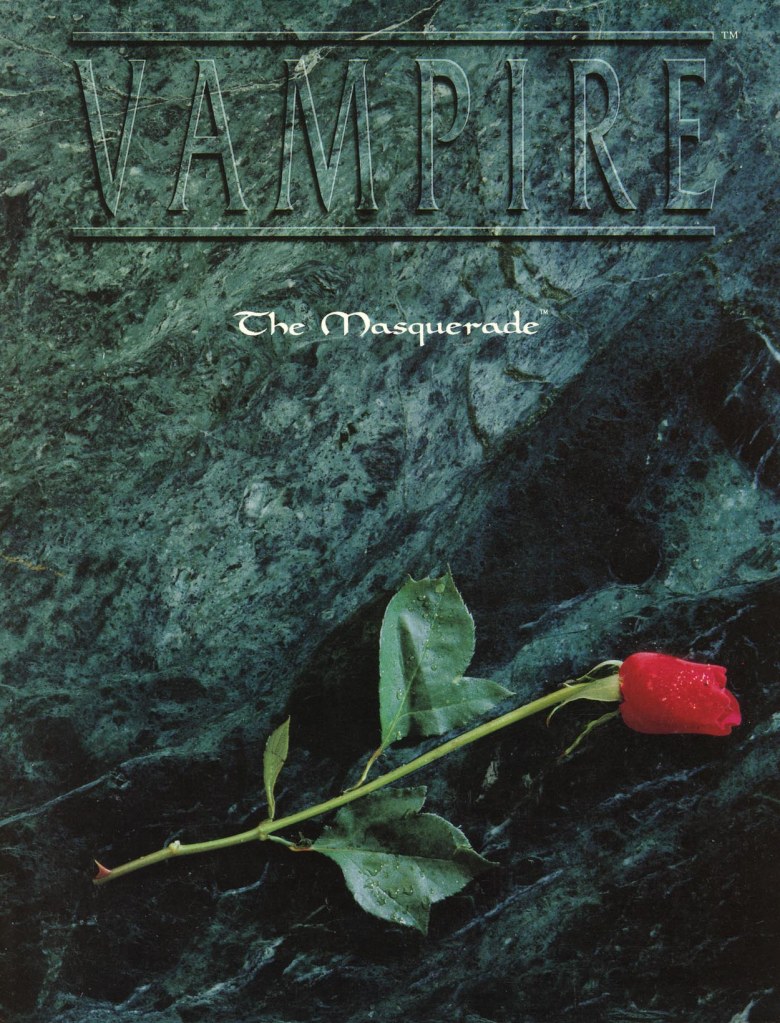
I previously and somewhat cryptically alluded to the fact that I have Vampire: The Masquerade to thank for my current career. While that is true, my road from picking up that marble & rose cover book in 1991 and cashing my first paycheck as a game designer isn’t a direct one. There were lots of turns, temporary rest stops, and more the a few dead ends. Nevertheless, I could have quite easily found myself in another line of work had it not been for Vampire.

I was a TSR fanboy, having come into the role-playing hobby via D&D like so many others. At the time, roughly between 1980 and 1990, TSR games were the easiest to find in local hobby shops and toy stores. I played D&D, Top Secret, Gamma World, Star Frontiers, Marvel Super Heroes, and even the much maligned The Adventures of Indiana Jones. West End Games’ Star Wars and FASA’s Shadowrun both dropped as I entered my final years of high school and were a nice diversion from D&D, but we always drifted back to rolling d20s and killing monsters.

I graduated high school in 1990 and played in an AD&D campaign during my freshman year. It was fun, but not as fun as it had been in the past. Part of it was being an “adult” and on my own for the first time. There wasn’t a lack of opportunity for entertainment on a weekend or even a weekday night in college (and many of those opportunities also included beer and women), so the dew was off the RPG rose then. And doing anything for a decade is bound to get a little tiresome. I found myself seriously considering dropping RPGs as a hobby and doing something else for fun.

My time at the State University of New York came to an abrupt and unexpected ending in June of 1991. As it turns out, despite the fact I was paying the SUNY system, they still expected you to show up to class once in a while. MY GPA was in the toilet and the university suggested that I try something else—anything else—some place other than there. Much to parents’ dismay, I had been kicked out of college, but it was suggested that if I got my grades up, I could apply for readmission. In September of 1991, I enrolled in the local community college with hopes of returning to the SUNY system for the Spring ’92 semester.

I didn’t do any gaming while at community college, but I did pick up the occasional RPG book or issue of Dragon magazine. Old habits die hard, after all. One of those issues was the November ’91 issue (the same month as my 19th birthday), Dragon #175. That issue featured a Role-playing Reviews covering three horror RPG products: Dark Conspiracy, “Blood Brothers” (for Call of Cthulhu), and some game called Vampire: The Masquerade from a company I’d never heard of before.

I liked a good horror film or book, but I wasn’t particularly enamored of vampires. I had read Interview with a Vampire by then and had seen The Lost Boys and Fright Night, but was far from a fang fan. I was more of a ghost story guy. But, in the review, author Allen Varney summed up his piece with “If you’re up for a potent and even passionate role-playing experience, look for this game.” That stuck with me. Maybe my problem with RPGs was that my tastes had matured and I needed something more than killing orcs and taking their stuff? I promised myself I’d track down Vampire: The Masquerade and see how it delivered a potent and passionate experience.

The problem was I couldn’t find a copy. My friendly local game shop, Man at Arm Hobbies, did have a copy of Nightlife (co-written by Bradley McDevitt whom I now work with at Goodman Games). I liked Nightlife, especially since it was by default set in New York City (right in my backyard) and you could play a ghost (see previous paragraph), but it wasn’t quite what I’d hoped or was looking for.

Somehow, I eventually tracked down a copy of Vampire. It might have been on another trip to Man at Arms or maybe different store. And while I can’t remember where I bought it, I do remember where I read it for the first time. I was sitting in the dining room at my friend Carl’s house, flipping through the book. The opening in-world fiction written to Mina Murray from Dracula opened the floodgates of my imagination. This was something different. But the real moment that changed my life came on p. 36 in the section entitled “Automatic Success.”

In short, Vampire included the mechanic where if the number of dice in your dice pool equals or exceeds the difficulty of the task you need to perform, you automatically succeed. In other words, if the Difficulty is 5 and I have 6 dice in my dice pool, there’s no need to roll. Other RPGs had suggested you don’t need to roll to accomplish easy tasks anyone can do, but this was the first time I’d seen a mechanism that allowed you to succeed on things that might be challenging for the average person.

It’s been 34 years since I read that section and I still remember how much it blew my mind. That was the moment I stopped thinking of myself as a lapsed DM and as a potential Storyteller.

The rulebook only got better as I read it further. As a confirmed punk with music tastes that included Dead Kennedys, The Misfits, Black Flag, The Damned, The Exploited, etc., I found lyrics to songs I knew and loved leading off sections of the book. Hell, the entire milleu of the game was “Gothic-Punk.” It was almost as if these White Wolf folks were cool like me!

The former DuBois Hall where my ongoing Vampire chronicle began.

When January of ’92 rolled around, I’d gotten my GPA up and was welcomed back to SUNY New Paltz. I left all my D&D books at home when I packed for my trip back to the dorms. However, tucked into my back was my copy of Vampire: The Masquerade and a bag of d10s. I had big plans that semester, ones which ultimately led to a Vampire chronicle that lasted for years in different incarnations with different players, a chronicle that began on regular Sunday nights by candlelight in the now-former DuBois Residence Hall.

Vampire kept me in the hobby for another decade and made me rethink what you could do with a tabletop RPG. And while I did drift out of the hobby again for a time in the mid-2000s, the lessons I’d learned from V:tM stayed with me. I never again considered dropping the hobby for good and when I came back in 2008, I found myself on the path to becoming a freelance game designer and writer. Had it not been for discovering Vampire when I did, I know the odds of me returning to the hobby would have been slim and I might not currently have the job I do in the industry. Let’s just say I owe a boon to Vampire, in all its shapes and forms, and it’s a debt I’m happy to oblige.
Embracing the Past

Nostalgia is a razor that cuts both ways. It can be comforting, a way to remember the good times of the past, yet it is also looked upon with a measure of contempt. Reveling in nostalgia too much is a sure-fire way to be accused of living in the past at the cost of the present. But when the present is terrible, nostalgia can be a coping mechanism, a way to make it through the days, weeks, months, but hopefully not years, before the pendulum swings again and brighter times return.

I’ve been dwelling on the past more than usual these days. A minute of looking at the news or doomscrolling on social media and it becomes obvious why. Add all that to the fact I’ve now seen more than a half a century pass and it’s no wonder I’m in the midst of both a mid-life (more like two-thirds-life) and an existential crisis these days. I don’t feel quite like I’m drowning, but rather that I’m treading water and waiting for the next wave to roll. Throw in a little recent health scare and the nights can be long ones filled with a lot of reflection, self-recrimination, and wondering how and where it all went wrong.

I need a break from all that. I need to reminisce about the good old days a little and maybe, just maybe, get a trickle of dopamine from the brain spigot. Where to begin?

The answer, strangely enough, seems to lie in a more than 30-year-old tabletop RPG. One that was a titan at the time and changed the entire paradigm of the role-playing industry. A game that, laid the groundwork for my current career in the gaming industry. Not directly, mind you, but had it not come into my life at the time it did, I could easily see myself doing something else for both a living and as a recreational pastime.

That game is/was Vampire: The Masquerade, first published in 1991 by White Wolf. And say it arrived exactly when it was most needed and struck all the right cords in my heart, mind, and soul, is an understatement.

Those two sentences just made me feel both sides of nostalgia’s blade. Vampire: The Masquerade is associated with so many positive memories. The games, the music, the friends, the lovers, the times, the unrepeatable sense of power and possibility that lies in the heart of anyone in their 20s. Like a thread in the weave of my life back then, Vampire wove through everything.

And yet, there’s a sense of embarrassment writing about it right now as a soon to be 53-year-old man. Not for having played it or spent so much time thinking about it then and the memories that come from that time, but from that sense that I should have other concerns these days. Why spend a moment thinking about Vampire when there’s 401ks, my next doctor’s appointment, and making sure my professional responsibilities are met? The past is the past and there’s far too little future left to think about “back then” and pretending to be undead. I suppose it doesn’t help that vampires have lost a little of their luster in the post-Twilight and What We Do in the Shadows 21st century.

But you know what? I think I can work through all that. We can’t go home again, but we can cherish those memories. And I’ve learned the importance of making memories, especially shared ones. The worst thing about growing old is that the number of people who share our memories gets smaller every year. Death takes some, friends fall out of contact, and our individual priorities change. In our youth, we mocked the old codgers that sat around talking about the old days, but once you hit a certain point in your life, you realize how important that activity is. Roy Batty’s final words at the end of Blade Runner hit a lot harder when you’re in your 50s, unmarried, and without children. A time will come when you, and everything you’ve seen, done, and dreamed of, are gone. All that’s left, if you’re lucky, is a name on a stone and few dozen people to think about you from time to time—until they too are gone.

I’ve said many times over the past years that Vampire is the perfect game for when you’re in your 20s. You feel immortal and tragically hip then anyway (or at least I did), so you and the vampire have a lot in common. I’ve voiced that opinion enough that I think that’s yet another reason why I feel some embarrassment writing about the game now. It’s been at least a decade since I ran a session of Vampire and my players at that time were all in their 20s and 30s, and it’s been at least 6 or 7 years since I played, having sat in on a convention game shortly after the 5th edition came out to see how the new rules worked and what still felt like the old days.

Now I’m thinking I might be wrong about all that. Maybe there’s something just as pertinent to be wrought from a game of Vampire when age has begun seeping into your bones? Maybe the game can serve as a stage to enact new stories, ones with different themes than those from 1991? Maybe it’s still worthwhile to throw the occasional handful of d10s down on the table and see what happens next? My games were never the “trench coat and katana” kind, but I’m certainly more mature and have seen more horror today than when I was a college student sitting with my friends in a common area of a Dubois Residence Hall’s suite at SUNY New Paltz playing by candlelight.

Maybe it’s time to bury the embarrassment and try something I once loved again and see what other emotions can come from it? Worst case scenario is I waste a little of what time I have left. Best case? New memories and maybe some happiness during a time when that’s a precious commodity.

I started writing this essay with the intent of explaining myself to an audience, but now I realized that was an audience of one. This is me working out my complex feelings about a time I loved and miss more and more with each passing year or latest breaking development in the news cycle. This is not me explaining to you why I’m thinking about Vampire: The Masquerade on a summer afternoon a quarter of the way through the 21st century. It’s me giving myself permission to embrace the past and to do so without shame.

Having received permission, now all that remains is the doing. Best get started then. You can come along with me if you’d like. We might even make a memory or two together as we go.

Strange Strategies

You might have noticed the subtitle of this blog is “Seventies Strangeness and Spookiness Meets Strategy.” The first part is pretty self-explanatory, but the “Strategy” might have you scratching your head. Allow me to explain.

In my day life, I work in the game industry, specifically the tabletop role-playing game corner of it. I write material and do game design primarily for the Dungeon Crawl Classics Role-Playing Game published by Goodman Games. This all means I spend a lot of time thinking about and playing games, and they make up a large part of my recreational time. And not just tabletop RPGs, but all sorts of games. It goes with the territory when you work in the industry.

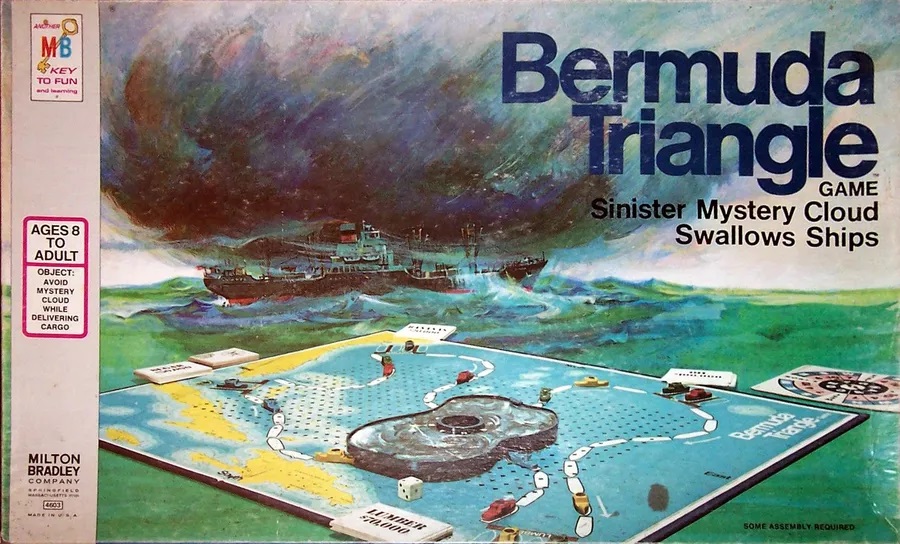
In addition to 1970s media, it’s my intention to cover games as well here, both those made in the ‘70s and those that evoke that era when it comes to form or function. For example, two treasured board games in my collection are the Bermuda Triangle game (produced by Milton Bradley in 1975) and the Alien board game (Kenner, 1979), both of which meet the first criteria.

Never have magnets been so scary.

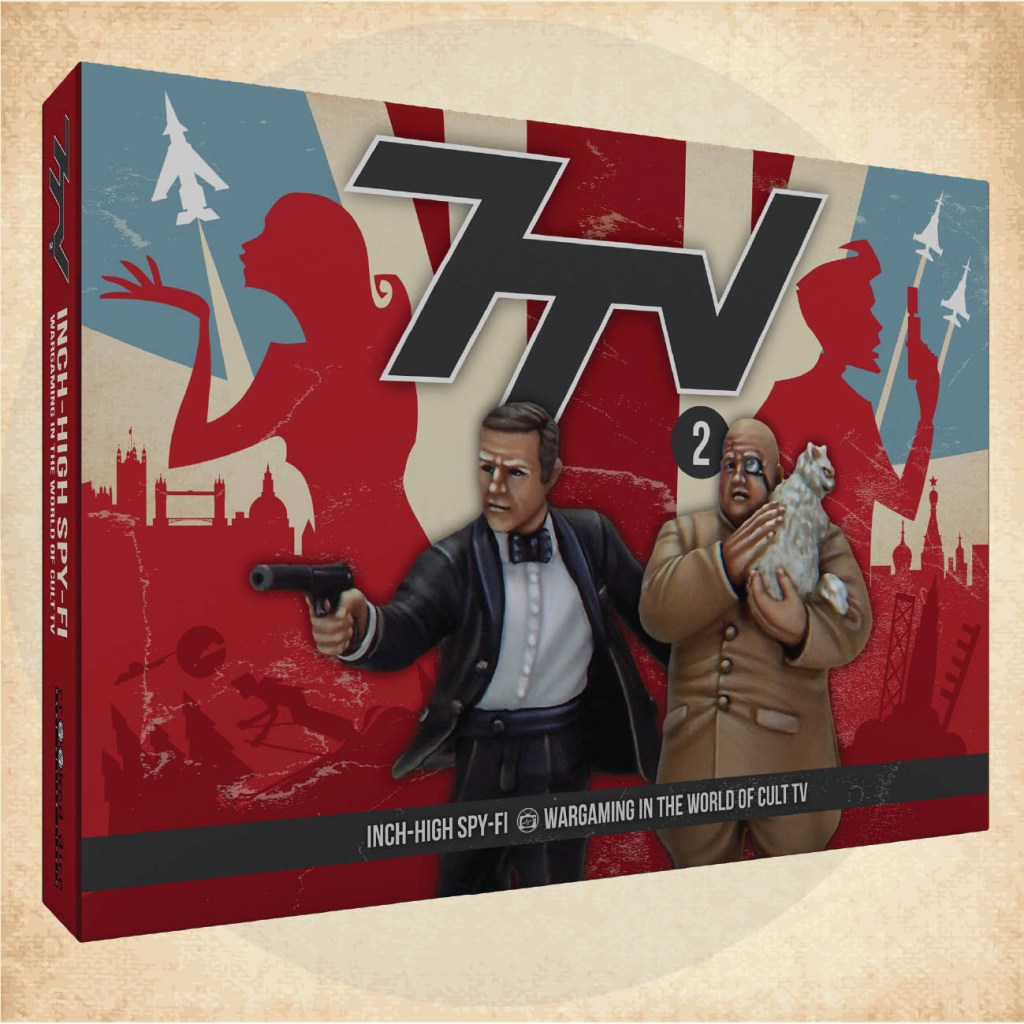
Another game that I’ve recently gotten into is 7TV Inch-High Spy-Fi, a modern miniatures skirmish wargame that’s set in the world of 1960s and 1970s TV and movies. While of current vintage, the game allows players to play games set in or reminiscent of that time period’s popular culture, be it James Bond movies, TV cop shows, or even folk horror with their “Children of the Fields” expansion. It, too, would be perfectly at home here at Shivers & Shudders, and I’m sure I’ll have some words about it and similar games as well before too long.

“Commander Whiskers is displeased, Mr. Bond.”

Most of the games that I plan on covering will have some connection to the horrific, the paranormal, or the bizarre. Ultimately, if you find yourself enjoy the rest of the weirdness I’ll be writing about around these parts, you find the games I’ll be discussing right in your wheelhouse. Hopefully, much like the delve into the hexploitation paperbacks of 1970s, you find a few gems you never knew existed and might be motivated to seek them out and give them a whirl during Game Night.